
Tank vs Tankless Water Heaters Which One is Right for Your Home
Hot water is a comfort many of us take for granted until it suddenly stops flowing. When your water heater breaks down, you face a choice that affects your home's energy use, comfort, and budget for years. Should you stick with a traditional tank water heater or switch to a tankless model? This guide breaks down the key differences, benefits, and drawbacks of each type to help you make a clear, confident decision.

How Tank Water Heaters Work
Tank water heaters store a large volume of hot water in an insulated tank, typically ranging from 30 to 80 gallons. The water is heated continuously or on a schedule, so hot water is ready when you need it. When you turn on a hot water tap, the heater releases water from the tank while cold water refills it.
Advantages of Tank Water Heaters
Lower upfront cost: Tank models usually cost less to buy and install.
Simplicity: They have a straightforward design, making repairs easier and often cheaper.
Reliable supply for multiple uses: The stored hot water can serve several taps or appliances simultaneously.
Drawbacks of Tank Water Heaters
Energy waste: The heater keeps water hot all day, even when not in use, leading to standby heat loss.
Limited hot water supply: Once the tank empties, you must wait for it to refill and reheat.
Large footprint: Tanks take up significant space, which can be a problem in smaller homes.
How Tankless Water Heaters Work
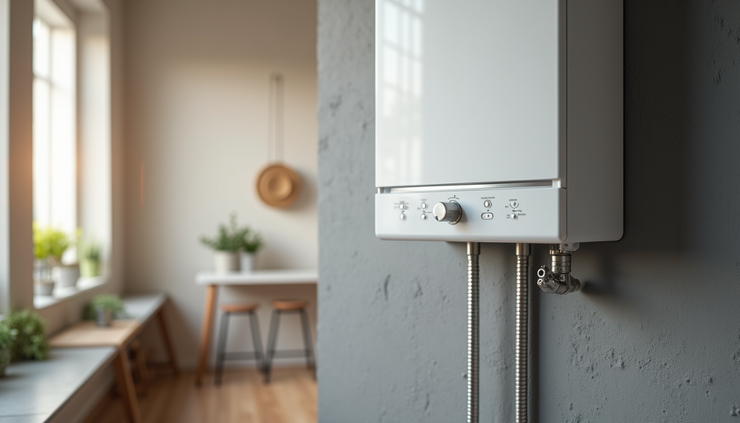
Tankless water heaters, also called on-demand heaters, heat water only when you need it. When you open a hot water tap, cold water flows through a heat exchanger and heats instantly. This means no stored water and no standby heat loss.
Advantages of Tankless Water Heaters
Energy efficiency: They use energy only when hot water is needed, reducing utility bills.
Endless hot water: You won’t run out of hot water during long showers or multiple uses.
Compact size: Small units free up space and can be installed in various locations.
Drawbacks of Tankless Water Heaters
Higher upfront cost: The unit and installation can be more expensive than tank models.
Limited flow rate: One unit may struggle to supply multiple taps at once without losing temperature.
Complex installation: Some homes require electrical or gas upgrades to support tankless systems.
Comparing Costs Over Time
The initial price difference between tank and tankless water heaters is significant. A typical tank water heater costs between $500 and $1,000, including installation. Tankless units often start around $1,000 and can go up to $3,000 or more with installation.
However, tankless heaters save money over time by using less energy. According to the U.S. Department of Energy, tankless water heaters can be 24% to 34% more energy-efficient for homes that use 41 gallons or less of hot water daily. For larger households, savings may be lower but still noticeable.
Consider your household size and hot water use patterns. A family of four with high hot water demand might see faster payback from a tankless system, while a smaller household might find a tank heater more cost-effective upfront.
Installation and Maintenance Considerations
Tank water heaters are easier to install in most homes, especially if replacing an existing tank. They require less specialized labor and fewer modifications to plumbing or electrical systems.
Tankless water heaters often need professional installation with possible upgrades to gas lines or electrical panels. Maintenance involves descaling the heat exchanger every 1 to 3 years, especially in areas with hard water, to keep efficiency high.
Which Water Heater Fits Your Home?
Choose a tank water heater if
- You want a lower initial cost
- Your household uses hot water intermittently or in smaller amounts
- You have limited space but can accommodate a tank in a basement or utility room
Choose a tankless water heater if
- You want to save energy and reduce utility bills over time
- You need a continuous supply of hot water for multiple bathrooms or appliances
- You have space constraints and want a compact unit
Final Thoughts
Choosing between tank and tankless water heaters depends on your budget, household size, and energy goals. Tank heaters offer simplicity and lower upfront costs but can waste energy and run out of hot water. Tankless models provide energy savings and endless hot water but require a higher initial investment and more complex installation.
Evaluate your hot water needs carefully. If you want to reduce energy use and have the budget for installation, a tankless water heater is a smart choice. If you prefer a straightforward, cost-effective solution, a traditional tank water heater will serve you well.


Comments